
What Causes Cataracts to Develop in the Eyes?
Cataracts are one of the leading causes of vision impairment worldwide, particularly among older adults. They develop when the eye’s natural lens becomes cloudy, interfering with the passage of light and resulting in blurred or dim vision. While aging is the primary factor, cataracts are not caused by age alone. A combination of biological changes, lifestyle habits, and underlying health conditions contribute to their development. Many individuals researching the Best Cataract Surgery in Chennai often seek to understand these causes to make informed decisions about prevention and treatment. Gaining clarity on how cataracts form can help in early detection and timely care, ultimately preserving long-term vision quality.
What Exactly Is a Cataract?
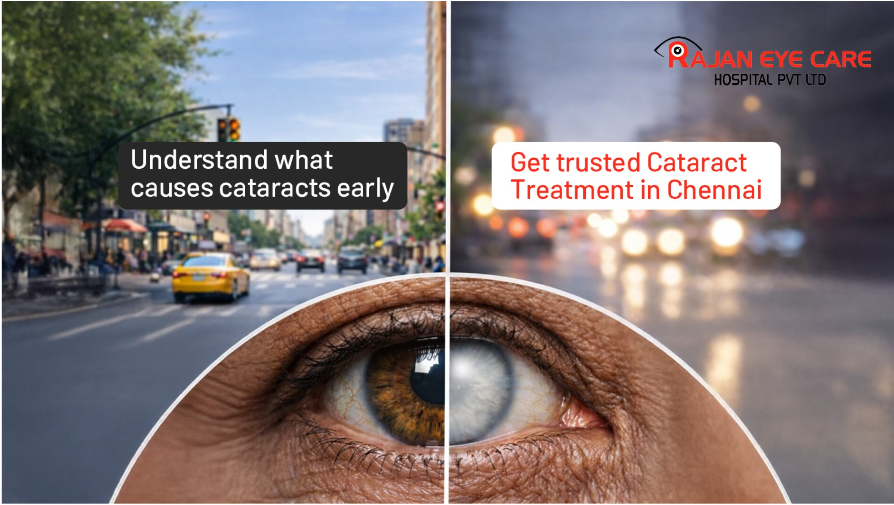
A cataract is not a growth or a layer over the eye, but a change within the lens itself. The lens is normally clear and flexible, allowing light to focus sharply on the retina. Over time, the proteins that maintain this clarity begin to break down and aggregate, forming cloudy areas.
This leads to:
- Reduced sharpness and clarity of vision
- Increased sensitivity to glare, especially from headlights
- Faded or yellowed color perception
- Difficulty focusing in low-light conditions
These changes occur gradually, which is why cataracts often go unnoticed in their early stages.
Why Do Cataracts Develop with Age?
Aging affects the eye at a cellular level. The lens undergoes continuous wear and tear and its ability to repair itself diminishes over time. Key age-related changes include:
- Protein degradation: Structural proteins in the lens lose stability and clump together
- Oxidative stress: Free radicals damage lens cells, accelerating clouding
- Loss of elasticity: The lens becomes less flexible, affecting focus and clarity
These processes are natural but progressive. As vision starts interfering with daily tasks like reading or driving, many individuals begin considering the Best Cataract Surgery in Chennai as a long-term solution for restoring visual clarity.
Can Lifestyle Choices Lead to Cataracts?
Lifestyle plays a significant role in either slowing down or accelerating cataract formation. Certain habits increase oxidative damage within the eye, making the lens more vulnerable.
Key risk factors include:
- Smoking: Introduces toxins that damage lens proteins
- Alcohol consumption: Excess intake affects nutrient absorption and eye health
- Poor diet: Lack of antioxidants reduces the eye’s ability to fight damage
- UV exposure: Long-term sunlight exposure without protection speeds up lens degeneration
Adopting protective habits—such as wearing UV-blocking sunglasses and maintaining a balanced diet—can delay progression and reduce dependence on procedures like the Best Cataract Surgery in Chennai.
Do Medical Conditions Contribute to Cataracts?
Yes, systemic health conditions can significantly impact eye health. Among them, diabetes is one of the most influential factors. Elevated blood sugar levels can cause fluid changes in the lens, altering its structure and accelerating clouding.
Other contributing conditions include:
- Hypertension: Affects blood flow to ocular tissues
- Obesity: Linked to metabolic stress that impacts the lens
- Long-term steroid use: Alters the biochemical balance within the eye
Early detection through routine eye examinations is critical. Identifying cataracts at an initial stage allows for better management before surgical intervention such as the Best Cataract Surgery in Chennai becomes necessary.
Can Eye Injuries or Surgeries Cause Cataracts?
Physical trauma to the eye can disrupt the delicate structure of the lens, leading to traumatic cataracts. These may:
- Develop immediately after an injury
- Progress slowly over months or years
Similarly, certain intraocular surgeries can sometimes contribute to cataract formation as a secondary effect. The severity and timing vary depending on the nature of the injury or procedure. Monitoring vision after any eye trauma is essential to detect early changes.
Are Cataracts Genetic?
Genetics can play a role, particularly in cases of congenital cataracts. These may occur:
- At birth due to inherited conditions
- During early childhood due to developmental factors or prenatal infections
Although less common than age-related cataracts, genetic cases highlight the importance of early screening, especially in children with a family history of eye disorders.
FAQs
1. Can cataracts be prevented completely?
Cataracts cannot always be prevented, but their progression can be slowed through protective measures like UV protection, a nutrient-rich diet and regular eye check-ups.
2. At what age do cataracts usually start?
They typically develop after the age of 50, but risk factors such as diabetes, lifestyle habits or genetics can lead to earlier onset.
3. Are cataracts painful?
Cataracts are painless. However, they gradually impair vision, which can significantly affect daily activities if left untreated.
4. Can cataracts be treated without surgery?
In early stages, vision can be managed with glasses or better lighting. However, surgery is the only definitive treatment to remove the cloudy lens.
5. How do I know if I have cataracts?
Common signs include blurred vision, glare sensitivity, halos around lights, dull color perception and difficulty seeing clearly at night.
Conclusion
Cataracts develop as a result of multiple interconnected factors, including aging, lifestyle habits, medical conditions and genetic influences. Although they progress gradually, their impact on vision can be significant if not addressed in time. The good news is that cataracts are highly treatable with modern medical advancements. Opting for the Best Cataract Surgery in Chennai ensures access to precise diagnosis, advanced surgical techniques and improved visual outcomes. Taking timely action and prioritizing regular eye care can help maintain clear, healthy vision for years to come.

 Call Now

